Technical Details
• Technology: Fixed-tilt solar PV structures
• Capacity: 121 MWp
• Estimated production: ~ 168 GWh/y
• Powering up to 44,210 Croatian homes with clean energy

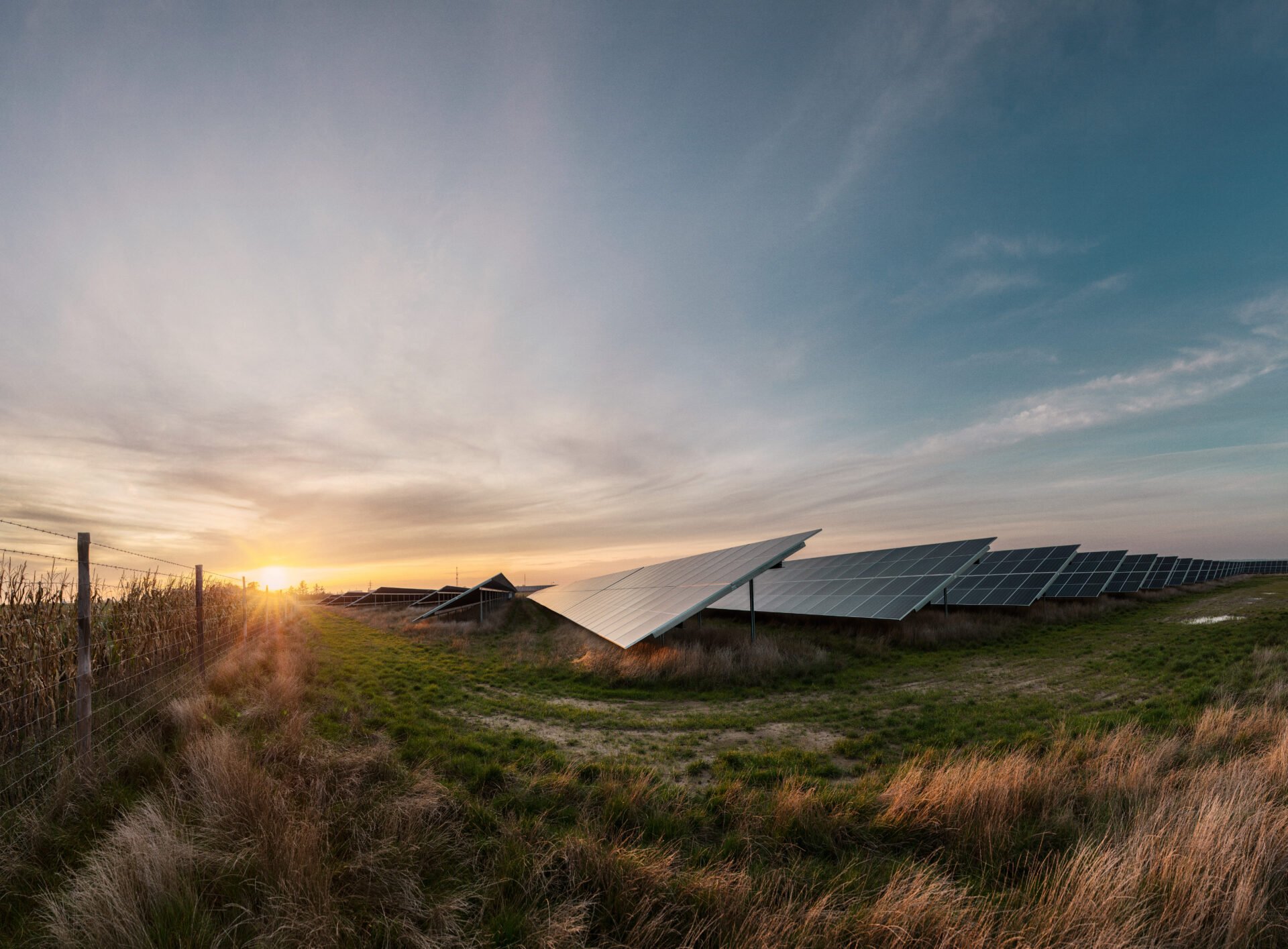
Martinska Ves project marks our first renewable energy development in Croatia. It is being developed by European Energy in Martinska Ves municipality. This project represents an important step in supporting the country’s transition to clean energy and strengthening the local energy infrastructure. This part of the country has favorable solar resources, as it is located in the lowland part of Croatia, making it an ideal location for large-scale solar development.
The project is in a late development phase, with the planned installed capacity of 121MWp. The total project area is 157 hectares, with a substantial portion allocated to solar PV panel installation and co-located Battery Energy Storage System (BESS). A portion of the space will be designated for service access and to maintain a safe distance from the outer fence perimeter. The remaining land will be considered for multiple uses, some of which could be for agricultural activities and the grazing of farm animals.
The Martinska Ves Solar Park will be in place for a period of 40 years, after which the land will be restored back to its previous state.
Ultimately, the development of this project will provide a reliable and sustainable source of renewable energy, playing an important role in the gradual decarbonization of industry. By reducing greenhouse gas emissions by an estimated 25,000 tons of CO₂ annually, the project supports the Croatia’s commitment to a cleaner environment. It will also enhance the security and stability of a country’s energy supply by diversifying energy sources and reducing fossil fuel dependency.


Technical Details
• Technology: Fixed-tilt solar PV structures
• Capacity: 121 MWp
• Estimated production: ~ 168 GWh/y
• Powering up to 44,210 Croatian homes with clean energy

Project’s Local Impact
When a solar PV park is designed, all parameters are considered to minimize the project’s impact on the nearby community and the local environment. European Energy operates in accordance with local and EU environmental legislation and requirements as well as conducts environmental screening during the early planning stages of the projects.

Local Engagement
European Energy believes that involvement with local communities is essential in all stages of the project. Therefore, our project team has cooperated with municipalities, local authorities, and key responsible people since the beginning.
Solar panels transform sunlight into electricity using silicon cells. When sunlight hits these cells, the electrons in the cells vibrate and this creates a DC (Direct Current) electric current in on AC (Alternating Current). AC is more efficient for sending power over long distances and can easily be adjusted using transformers, reducing energy loss. The solar inverter then does its job, turning this DC electricity into electricity that can be used right away, stored in batteries, or sent back to the grid. It is a process that helps us tap into the sun’s power for a cleaner and more sustainable energy source.
Construction will take 10–16 months, and we will keep local stakeholders informed of progress.
The potential noise from the solar park can come from the construction phase, the decommissioning phase, and from technical installations such as transformers. We would expect that noise impact will be minimal and kept within the normal site working hours during the construction and decommissioning period.
Solar cells are not dangerous to humans and animals. As part of our efforts to explore opportunities for the multi-use of land associated with our solar parks, we even have sheep that live at some of our solar parks in different countries, where they can, among other things, seek shelter from the rain under the solar panels.
European Energy has performed several detailed studies on the actual components and materials used in manufacturing the solar panels, and there is no indication that PFAS or other chemical substances of this type are present in the panel.
There is no reason to assume negative environmental impacts after a storm. Under extreme cyclone events, some panels might fly away and break while falling to the ground, but even if they might not be re-collected immediately, there is no risk of contamination leaking or washing off the broken panel. There is nothing inside which potentially can contaminate, and even dedicated ground-water protection areas should be free of contamination risk.
European Energy does have reports covering the risk of contamination in relation to e.g., storm and fire, and is planning to conduct further experimental verification of the lack of environmental risk factors.
A Battery Energy Storage System (BESS) has multiple safety features to significantly reduce the risk of failure. In the unlikely event of a fire, fire detection and prevention systems are installed in each module to quickly handle and suppress incidents. The BESS units are also equipped with gas suppression systems to extinguish fires, ensuring the safety of the facility and surrounding areas. They are thermally and chemically stable, and pose no risk of harmful vapors or gas leaks and therefore, no health risks to public health.
The round-trip efficiency, which is the amount of energy coming out of the system compared to the amount of energy coming into the system, is typically around 90%.
The storage duration of a BESS is directly related to its capacity. For instance, a battery with a power capacity of 1 MW and a usable energy capacity of 2 MWh can store energy for two hours, while one with 4 MWh can store energy for four hours. While there may be some minor standby losses, these typically have a negligible impact on the overall performance of the battery.
Climate change is one of the main drivers of the loss of biodiversity. Thus, it is crucial to build renewable energy projects to reduce CO2 emissions and minimise the impact on biodiversity. Locally, biodiversity can be improved through detailed planning, eliminating the use of pesticides and fertilisers, and implementing initiatives that support biodiversity. The potential for positive effects will be highest in areas with degraded biodiversity.
At European Energy, we prioritise initiatives that improve local biodiversity and overall nature values on and around our project sites. Wherever our solar parks replace conventional farming, they eliminate the use of fertilisers and pesticides, thereby having a positive effect on biodiversity, as well as the ground water, streams, and lakes in the area.
Solar PV parks require very little maintenance. Typically, only a few visits per year from a small maintenance team are needed to ensure everything is functioning properly.
The best way to get in touch with us is through the following email address info-eebalkans@europeanenergy.com
If you would like to inquire about the project, you are welcome to reach out to us with any questions or thoughts you may have—whether it is about specific areas of interest, updates on our progress, key milestones, or the overall timeline. We are here to provide insights and keep you informed on every step of the project.
We are also open to receiving grievances on anything that negatively affects people or the environment. It could be unfair or unsafe working conditions, impacts on communities or consumers, or pollution and environmental degradation.
We encourage you to speak up about any harm caused by us or our business partners, whether it is affecting workers, communities, or the environment.
We appreciate your effort in helping us maintain responsible and safe operations.
WHY SHOULD YOU CONTACT US?
European Energy believes that engaging with local communities is essential throughout all the phases of our projects. From an early stage, we cooperate with municipalities and other local authorities. We also manage various process to proactively inform and engage with local communities on matters relating to developments in the project.
Anyone can contact us, but especially if you:
HOW CAN YOU CONTACT US?
Follow the instructions in the Form below and you will receive a response within 7 working days.